Over the Recording Academy’s controversial 31 year history of honoring the best in yearly hip-hop releases, female rappers have only been able to snag a collective 44 nominations over five categories and I’m here to shame the academy and make a plead to find new ways to honor the true trailblazers of rap. Back in 1995 when Salt-N-Pepa and Queen Latifah made history as the first female rappers to take home Grammys when they won for their singles ‘None of Your Business’ and ‘U.N.I.T.Y’ respectively they found themselves solidified as pioneers in hip hop. Fast forward five years, and Lauryn Hill would find her self making history as she won 5 Grammy awards in one night, including the most prestigious Album of the Year award.
In an effort to recognize more female emcees the academy created the Best Rap Solo Performance category in 2003 which was only presented twice (Missy Elliott won both times) before it was disbanded in 2005. The rest of the early 2000’s saw many woes presented for the state of female rap including imprisonment, illness, or releasing commercially/critically underwhelming projects. By the end of the decade, the desire for female rappers may have not dried up but the once healthy budgets for them had been drastically reduced or eliminated all together by labels. Here enters the second coming of female rap (p.k.a. Nicki Minaj). Minaj’s campaign leading up to her debut was one of critical and commercial success and in the 2010’s her impact could be felt as the new crop of female rappers began to gracefully walk in the doors she had to viciously kick in.
Despite limited resources, shady deals, and the expectation of failure being prematurely and unfairly attached to their names, the female rappers of today have permanently etched their names into history books along with (and often times surpassing) their male counterparts. Minaj holds the record for most Billboard Hot 100 entries for women (109) and places 4th overall, tying with Elvis. In addition, she’s the 3rd highest selling female artist in the United States behind Rihanna and Taylor Swift according to the RIAA. Cardi B has collected 3 #1s in her brief career, enough to place her 11th in terms of rappers with the most #1 singles. She also has the highest certified female rap single of all time courtesy of Bodak Yellow, which is 9x platinum. Additionally, Cardi is the first and ONLY solo female rapper to win the Grammy for Best Rap Album. More recently, Doja Cat & Nicki Minaj’s ‘Say So Remix’ went #1, and was joined at the top of the charts by Megan Thee Stallion & Beyonce’s ‘Savage Remix’ which occupies the #2 spot at the time of publishing. This marked the first time four black women occupied the top 2 on the Hot 100, but more interestingly it marks the first time two female rappers were credited in lead positions in the top 2 of the chart.
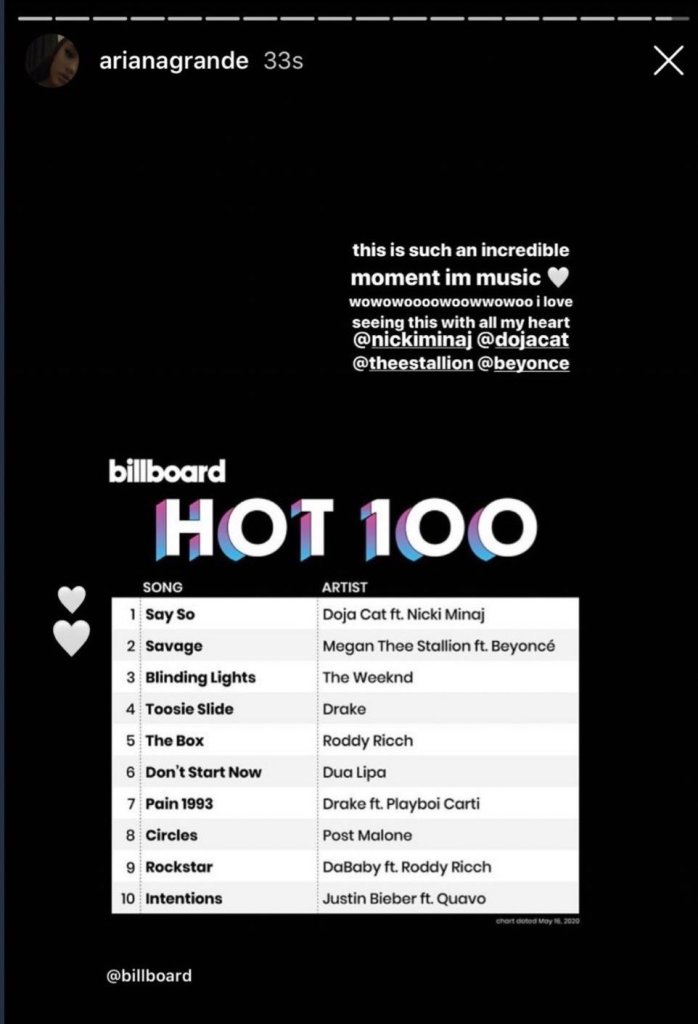
Chart stats aside, female rappers have worked endlessly since the genre was created to ensure they’re always pushing the envelope creatively. Female rappers have used color metaphors, double entendres, and multiple flows to tell rich and vivid stories through their music. They’ve released high quality, high energy videos that match the energy of the accompanying song. Female rappers energy doesn’t just end with their high octane videos, their live showings are yet another way of coupling their dynamic personalities along with their infectious hits. Of course, there is rhyme to this reason. Female rappers can invest their all into their craft and it be ripped to shreds or unfairly compared to that of their male counterparts who more times than not are not on par with them to begin with. But if a male rapper releases 3 albums in less than 2 years with the same flow? If a male rapper releases work heavily influenced by whatever the current trend is or releasing consistent bodies of work showing no artistic growth? They become critically praised and somehow become the standard. Influencers and tastemakers in hip hop who have more of a say regarding the culture than they deserve take drastically different approaches to reviewing and interviewing female rappers as opposed to their male counterparts.
Questions centered around female rappers sexuality, relationships, and issues with their female peers often are posed to overshadow the bodies of work female rappers find themselves promoting whether intentional or not. One thing’s for sure though, you can’t deny the effort that has gone into bodies of work from the beginning of time but especially as of late. It’s time that the Grammys get with the times and shake the table by recognizing the women of this genre who have contributed just as and in many cases more than the male rappers who dominate these award ceremonies. It may inspire your favorite mediocre male rapper to push his pen and keep up with the versatility the women are consistently serving. Or at the very least give them their own category because the longevity of Nicki Minaj deserves to be celebrated. Doja Cat’s animation deserves to be celebrated. The lyricism of Rapsody deserves to be celebrated. The authenticity of the City Girls deserves to be celebrated. Female rap is alive and well and it’s time the Grammys adapt to reflect that.
 The Sounds of Music
Loved reading this. I didn’t realize how much the women were getting snubbed in the Hip-Hop section of the Grammy’s. I, agree, we can urge them to acknowledge the women or we can continue making and praising them on our own award shows. 🙂
LikeLike